

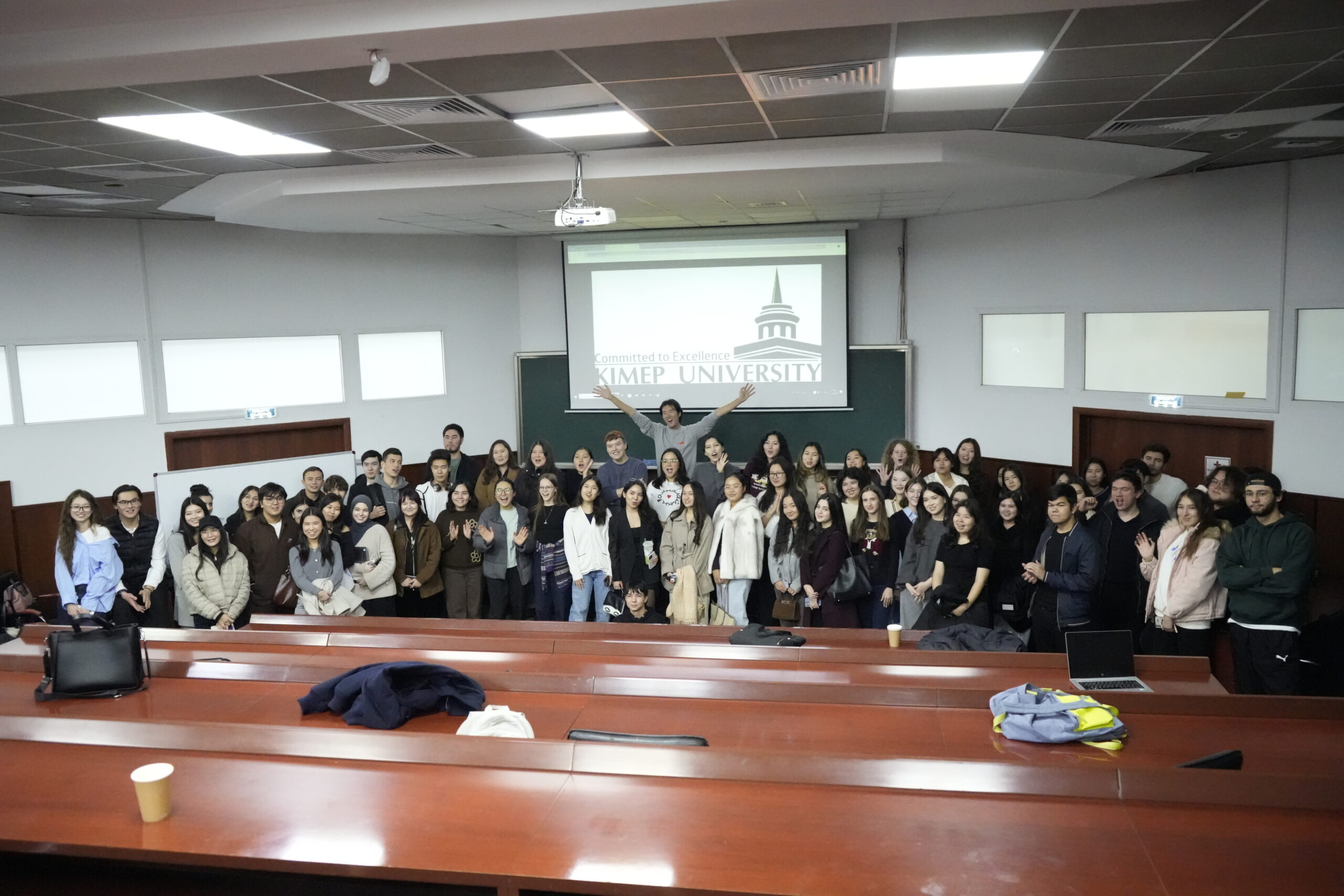
ALMATY — On Nov. 12, KIMEP University hosted a session led by KIMEP PEER, a newly established youth organization focused on reproductive health education and HIV prevention. For many students, this was their first opportunity to hear clear, factual information about HIV directly from professionals instead of rumors or outdated stereotypes.
YPEER’s presence at KIMEP is not entirely new. Tomiris Moldagali, one of the lead trainers, explained that similar awareness sessions were conducted before KIMEP PEER officially formed. “Back then, the atmosphere was different,” she said. “Students were curious but hesitant. They were afraid to ask certain questions. Now, I see real change—they’re ready to talk.”
KIMEP student organizers saw the event as an essential step in bringing HIV education into academic spaces. Over 60 students attended. Students quickly moved from quiet observers to engaged participants. Questions flowed: Can you tell if someone has HIV by looking at them? Is it true that only certain groups are at risk? One of the trainers addressed each of them thoughtfully: “HIV doesn’t have a face, gender, or lifestyle. Anyone can be affected, and by looking at people, it’s impossible to tell if they have HIV.”
Azat Maratuly, president of KIMEP PEER, the organization behind KIMEP PEER’s campus efforts, reflected on the event’s impact:
“KIMEP PEER has existed since 2021, but it wasn’t that active at first,” Maratuly said. “I’d already worked in the YPEER network for four years before entering KIMEP. When I got here, I knew this work shouldn’t stop. This topic is too important for students.”
Maratuly explained that previous attempts at reproductive health education on campus felt scattered.
“Earlier, the trainings about HIV and reproductive health at KIMEP were chaotic,” he said. “They were either extremely limited or only available to certain groups, for example, for dormitory residents. Sometimes they didn’t happen at all. That’s why we’re trying to rebuild the culture around awareness. And I’ll emphasize this: we don’t want people confusing our work with JARQYN. We do REAL education. We want students to know their bodies and their health without shame.”
Maratuly added that the turnout exceeded expectations.
“The preparation itself was an interesting experience, and I’m impressed by how many students came voluntarily. The session’s impact will resonate, motivating us to expand and reach more people. ”
Students’ reactions echoed the sentiment of engagement and appreciation. Bakhtygul Kamalova, a second-year Business Administration student, admitted, “I realized I didn’t know much. I assumed HIV was rare or happened to other people. The trainers explained it’s still a major issue, even in Almaty.”
Journalism student Medina Meirambek noted the importance of a trusted environment: “I liked this event a lot, and I think events like this should [held] be more in our university. One thing I didn’t like was that two different training sessions were at the same time and in different halls, I would like to listen to the other session also.”
Islam Nussibaliyev, a student in International Relations, shared his thoughts:
“The lecture was extremely engaging and informative. I’m glad I attended; it expanded my understanding. I also want to thank the organizers. I hope future lectures like this will continue raising awareness and knowledge on this topic. The organization was top-notch, from room preparation to speakers and even a pleasant break.”
“Fear has been the default in HIV education for decades, scare tactics, shocking images, guilt,” Tomiris said. “But fear isolates. We use empathy and humor. That’s how young people learn and retain information.”
Trainers shared updated global statistics, explained how antiretroviral therapy allows people to live healthy lives, and debunked myths about casual transmission, emphasizing that HIV cannot spread through hugs, shared utensils, or social contact.
As the event wrapped up, students lingered, asking for resources and signing up for KIMEP PEER’s volunteer program. The room’s quiet was thoughtful, reflective, a sign that important learning had taken place.
Breaking the silence, it seems, is the first step toward understanding, and KIMEP’s students are taking that step boldly.